
Here’s your game plan for playing a sport in college
Athletes know that preparation is the key to success. They also know that things don’t always go as planned. If you’re hoping to play a sport in college, it’s helpful to keep both these truths in mind. Read on for advice from our team and partners on being prepared, staying flexible, and knowing your options.
Get a running start
The recruitment process for college athletes begins as early as their sophomore year, depending on the sport.
“The biggest piece of advice I have is to start early,” said Granite Edvance President and CEO Christiana Thornton, whose son, Owen, recently completed his freshman year and first baseball season at Messiah University. “The timeline is really important to be aware of and start planning.”
Here are a few things to do early:
- Register for the NCAA if you think you may want to play at the Division I or Division II level. You can register any time, but it’s best to start early so you can be aware of requirements.
- Make your college list, keeping in mind academics, school culture, and finances, as well as athletics.
- Start getting video coverage of your games to share with coaches when you reach out.
- Do your research and make a list of tasks with timelines.
If you want to play a sport in college but didn’t get an early start, there are still opportunities for you! If there are any DIII schools on your college list, you may have an easier time getting onto those teams. You can also attend an open tryout as a walk-on athlete or join a club sport.
Communicate Effectively
To get a spot on a college team, you need more than a great pitching arm (or 3-point shot or mile PR). You need good communication skills.
First, you’ve got to be proactive. If you’re a good high school athlete, especially in a small state like NH, you might think that coaches will come looking for you. But the truth is, they probably won’t. You will need to reach out to coaches at the schools you’re interested in. And you will need to follow up with them after making visits, sharing videos, etc.
“The opportunities that came along for Owen really ended up being the ones that he pursued himself and pursued very early in the process,” Christiana said.
Next, make it easy for coaches to learn about you. When emailing them, use a clear subject line that includes your name and graduation year, said Ben Chipman, Head Coach for the Plymouth State University Women’s Hockey Team. If you send them video highlights, be sure to use a platform that offers free, easy access – not one that requires a log-in and/or subscription.
Finally, be sure to personalize your outreach, Ben said. If you’re reaching out to several coaches, go ahead and copy-paste your key points. Just be sure to write an intro that shows you’ve done your homework, such as congratulating them on a recent game or sharing what you like about their program. And of course, double-check their name and other details.
Find a good fit
Your sport may be a big part of your life, but it’s not the only thing! As you explore schools and opportunities, ask yourself two questions:
- What’s most important to you as a student? Consider amount of financial aid, courses and majors, and the size, location, and culture of the school
- What’s most important to you as an athlete? Look at the team ranking and athletic facilities, but also consider how much playing time you’re likely to get, what your sports schedule will be like, and whether the coach and team members are a good fit for you.
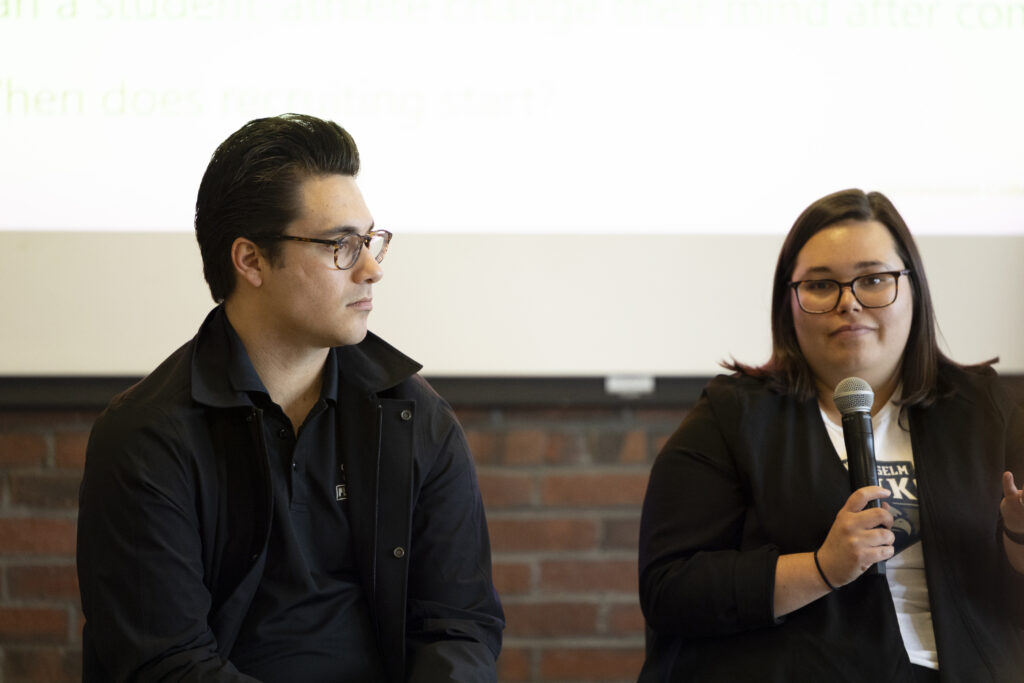
Choosing a college as an athlete isn’t just about NCAA divisions or amount of playing time. It’s about friendships, personal growth, finding your career pathway, and more, said Lauren Lavigne, Assistant Director of Athletics at Plymouth State University. “Don’t just let your identity as a [student athlete] define your entire college experience,” she said.
And don’t forget that coaches and admission staff are interested in you as a whole person, too. So yes, that means they’re going to look at your grades and other achievements.
“Our coaches want to know that you’re going to be successful at our institution,” said Sagemarie George, Assistant Athletic Director for Compliance and Team Logistics at Saint Anselm College.
Planning for college as a student-athlete is a little like running with a ruck sack. Along with all the hard work of exploring colleges, completing applications, and applying for financial aid, you’ve got the added challenge of landing a spot on a team. But here’s the good news: Because you have more factors to consider, you may end up with fewer colleges to choose from. And that may make your decision a little bit easier in the end.
Want more info on playing a sport in college? Check out our Athletics Insider!